Filmmaker Moritz Enders on 80 metres of water, the limits of the Andromeda reconstruction, Seymour Hersh and the geopolitical significance of the Nord Stream explosions
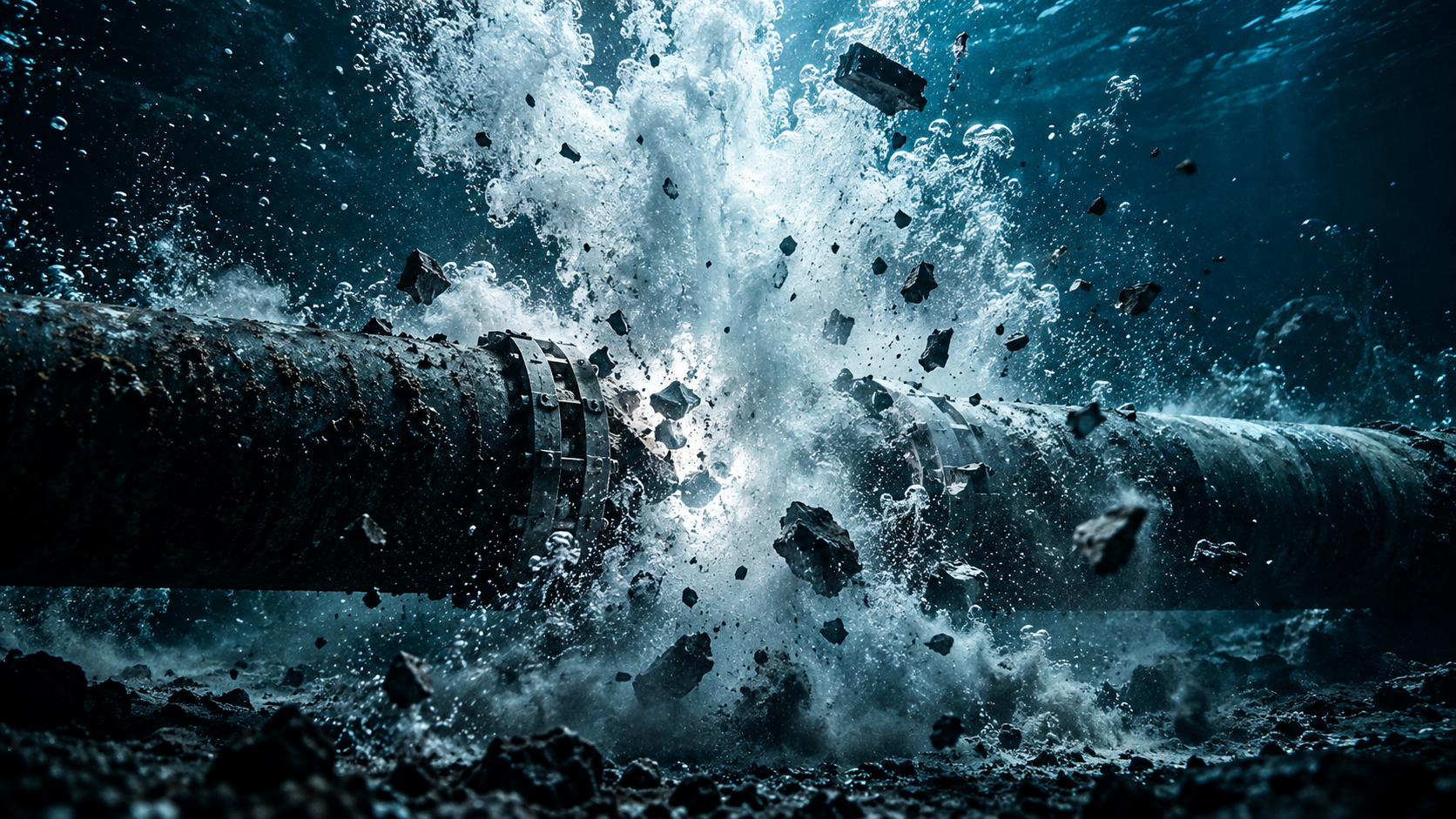
A sailing yacht, several divers, explosives and an operation at a depth of roughly 80 metres: filmmaker Moritz Enders considers the reconstruction according to which a Ukrainian group using the yacht Andromeda blew up the Nord Stream pipelines to be highly unlikely. In his documentary ‘Nord Stream – The Explosion’, he examines technical and logistical questions, speaks with journalists, engineers and former intelligence officials, and also deals with the account given by US journalist Seymour Hersh. In conversation with Patrik Baab, Enders explains why, in his view, depth, decompression, positioning, explosives and the duration of the operation in particular argue against a simple sailing-yacht operation. From there, the conversation moves to the capabilities such an act of sabotage would require, to Enders’ hypothesis of a military commando operation, and finally to his geopolitical interpretation of Nord Stream. Enders repeatedly makes clear where his research reaches its limits: he says he cannot prove Norwegian involvement, cannot reach a final judgement on the exact detonation method, and does not know what Olaf Scholz knew before the explosions. The statements that follow reproduce the research, assessments and hypotheses he presented in the interview.
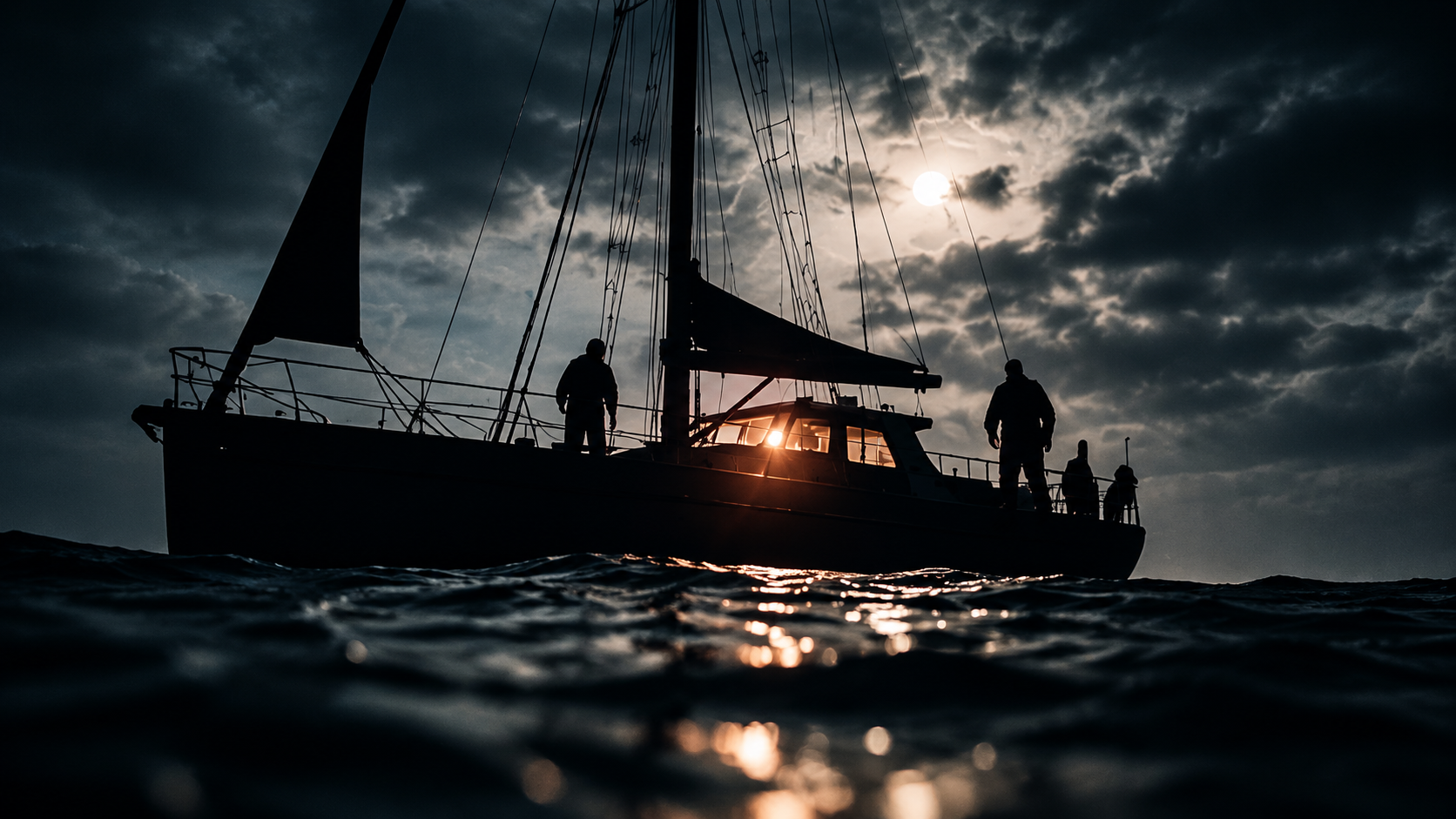
Could the Andromeda story work technically?
Patrik Baab: Why does this story have to be wrong?
Moritz Enders: It is highly unlikely. The thing with the clip on the nose is not even what the Federal Prosecutor General says. I think even the Federal Prosecutor General assumes that, according to this version, they used diving tanks. But now you have to collect all the details. Every detail on its own is almost impossible, and in combination it probably becomes 99.99 percent impossible. There are different aspects you would have to take into account. One is the technical feasibility of the whole thing. How much equipment do I need? What equipment do I have to take with me? How many diving tanks do I need? How heavy are the explosives? How do I lower all of that into the water? How do I navigate on the Baltic Sea? How do I hold position above the place where I want to carry out the attacks? How long can I stay underwater? Do I have to decompress or not? They would have had to do that four times. There were four different explosive charges, even if three of them were placed relatively close to one another. What expertise do I need down there? How cold is it underwater? How do I orient myself? It is pitch-dark, so I also need lights. Taken together, that is already a major logistical challenge.
Moritz Enders: The biggest challenge is probably decompression. Basically, I would need a decompression chamber. If I do not have one, when I surface I have to stop again every 25 metres for about a quarter of an hour to decompress. Then the oxygen tanks run out very quickly. Even if I get down and back up, I no longer have much time to do anything down there. If there are currents underwater, which is likely, I have to swim against them. That costs more oxygen. So I would actually need an orientation line with additional oxygen tanks attached to it. But that line would have to be lowered from the boat. If I have a sailing boat, it is guaranteed to drift. I cannot use an anchor chain because it would have to be about three times as long as the depth. At 80 metres I would need 240 metres of chain. No sailing yacht has that. So I have to run the engine and navigate back and forth above the spot. But then the supply line makes little sense again.
Moritz Enders: Apart from that, of course, you are seen and registered on the Baltic Sea. You can switch off the transponder, but then you may attract attention anyway. People would ask what a sailing boat is doing for hours exactly above the places where the pipeline runs. A military journalist told me they would need at least ten hours. So this cannot be done with one single dive. This is something for professional divers.
Moritz Enders: Then there is another aspect that the Swedish engineer Erik Andersson pointed out to us. He went to the sites himself and filmed there with an underwater drone. We were allowed to use those pictures in our film. If I want to keep an operation secret, I do not drive across an additional national border in a van with explosives on board. These are also special explosives. Underwater you need different explosives and underwater detonators. With all that stuff, according to this story, they cross another border, drive around Rügen and even get caught by a speed camera.
Patrik Baab: So they really were caught by a speed camera?
Moritz Enders: Thankfully they were caught by a speed camera, so that we know they were there. Then they put a small Ukrainian flag on the sailing boat and were clearly visible. As Ola Tunander puts it, perhaps too clearly visible. If I want to create a cover story, I do it in such a way that it leaves a trail. They also found traces of explosives on board the yacht, curiously enough at the kitchen table. I do not know whether they stirred the explosives into their muesli. You would certainly expect to find explosive traces, but not necessarily there. I also learned that the yacht was returned to its owners after only a few days. If I am investigating it, I probably need weeks to examine it properly forensically.
Moritz Enders: And then there is the evidence recovered from the seabed. The Swedish ship recovered material and it is being kept under lock and key. If the Andromeda crew story is correct and I have the evidence, why do I not release it? That would be wonderful. I could say: we found explosives on the yacht, and then we can compare them with the explosives used underwater. We do not know all of that. We have the technical feasibility, the logistical problems, the travel route and no access to the evidence. On this basis it is being claimed that these Ukrainians did it because they sailed around there. For me that is too thin.
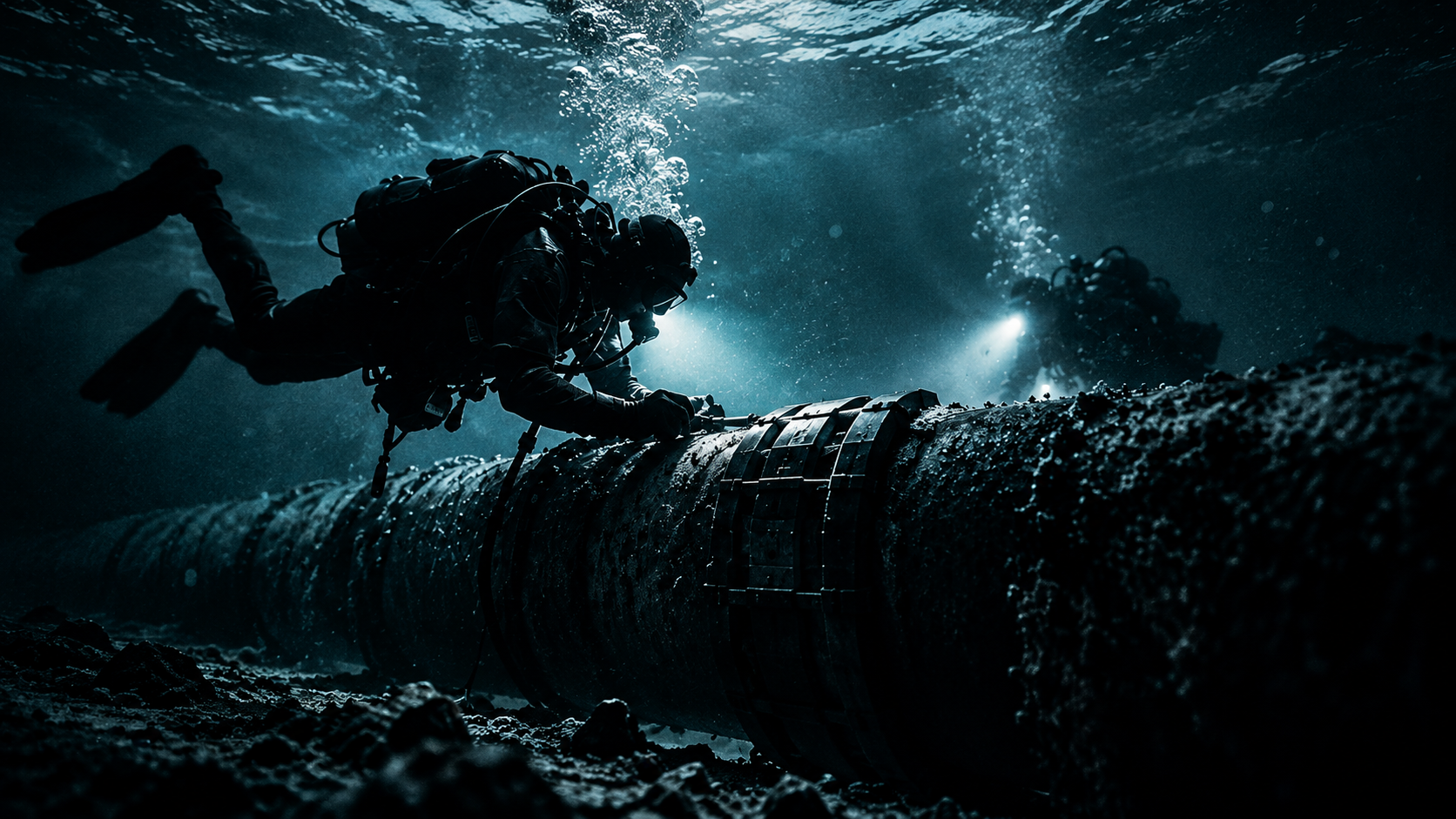
From a sailing yacht to a military commando operation
Patrik Baab: If it was not the Ukrainians, who was it then?
Moritz Enders: After the film I spoke with more people, military journalists and people from the Bundeswehr environment. They agree that it was a broadly planned military commando operation and they are of the opinion that the United States was behind it.
Patrik Baab: That is also the account Pulitzer Prize winner Seymour Hersh presented. He said it was an operation by US special forces. How, according to him, did it work?
Moritz Enders: According to Seymour Hersh there was a naval exercise on the Baltic Sea, BALTOPS, a few months earlier in June 2022. They are said to have used that as cover to carry out the underwater operation, possibly with specialist divers who would have been equipped very differently. The explosive charges were then allegedly placed on the pipelines and detonated later by means of a sonar buoy. That would mean a P-8 Poseidon, essentially an anti-submarine aircraft based on a Boeing, flew over the Baltic Sea and dropped the buoy. Ola Tunander has dealt with these flight movements very intensively. Dirk Pohlmann published the Tunander files, where the flight movements are laid out in detail.
Moritz Enders: The idea is that the sonar buoy sent an acoustic signal to the explosive charges. A source entrusted this information to Seymour Hersh. Hersh could not check the underwater acoustics himself, so the information was checked by Professor Theodore Postol, formerly a physics professor at MIT and also an adviser to the Pentagon. He knew underwater acoustics and came to the conclusion that the technical description was possible.
Patrik Baab: And according to your research, how was such an operation prepared?
Moritz Enders: We took the Hersh thesis seriously and came to the conclusion that there is something to it. But there are details that seem shaky to me. I have spoken again with military people who say that triggering the charges by sonar buoy is too complicated and too prone to failure. In their view, the charges could simply have been fitted with timers. Once those timers are running, the charges can no longer be stopped and will explode. So I cannot allow myself a final judgement here.
Moritz Enders: There are so-called Underwater Demolition Teams. They prepare amphibious landings and remove obstacles. Some of them have submersibles. With such craft they can operate at depths such as 80 metres. That would also simplify the decompression question. There are ways to attach decompression chambers to submarines, and there are also ways of working with robots underwater. These are highly technical operations. I do not understand all of the technical details. I put the possibilities next to one another: it may have been the more complex sonar-buoy story, or it may have been a professional underwater team using submersibles and underwater robots.
Moritz Enders: The decisive point is that it is a highly complex action. It is a militarily planned commando operation that has to be planned months in advance. This is not something you simply do with swimming trunks and a clip on your nose. If we agree that this is a military commando operation, however it may have been carried out in detail, then the question becomes: who is capable of doing something like this, and who has an interest in doing it? If you place the event in a geopolitical context, you arrive at very different conclusions from the Federal Prosecutor General.
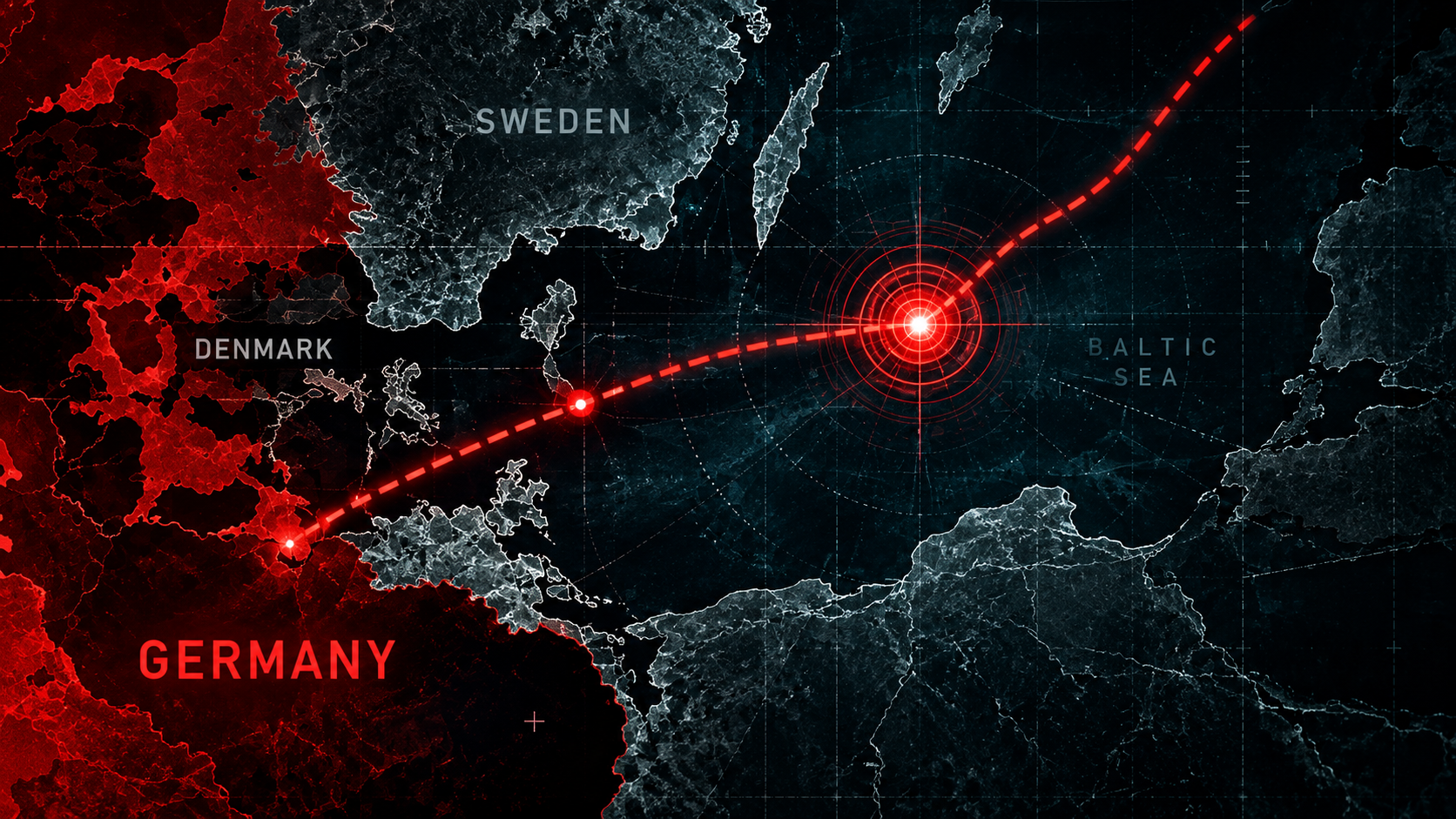
Why Nord Stream mattered geopolitically
Patrik Baab: Why would the United States have wanted to prevent Nord Stream?
Moritz Enders: Ola Tunander and Dirk Pohlmann explained that to us. The Federal Republic of Germany was anchored in the transatlantic camp. Helmut Schmidt was a transatlanticist. Nevertheless, Schmidt also had German interests in mind and tried, through the gas-pipeline business, not only to obtain gas but also to strengthen ties with the Soviet Union. That goes back to the idea of change through trade and rapprochement. Willy Brandt also pursued an understanding with the Soviet Union while Germany remained in the transatlantic camp.
Moritz Enders: When the Soviet Union began to fall apart, there were people who recognised the potential of the Russian market. Alfred Herrhausen, for example, recognised that a huge market was opening for German industry and that this could be advantageous for both sides. The geopolitical component, however, goes back to the Heartland theory of Halford Mackinder. The question was how a maritime power could remain dominant and how alliances inside the Eurasian landmass could be prevented. A potentially strong alliance would have been Germany and Russia.
Moritz Enders: George Friedman of Stratfor said in a filmed appearance that the great concern of the United States had always been a rapprochement between Germany and Russia: Russian raw materials combined with German technology. In my view, NATO has established itself in Europe also through the conflict, or supposed conflict, with Russia. If the United States wants to control the Heartland, it needs bridgeheads in the West and East. That is how I interpret the geopolitical logic.
Patrik Baab: Because otherwise the dominant role of the United States as a maritime and hegemonic power would be limited?
Moritz Enders: Exactly. Then they would become, so to speak, superfluous. There is that old formulation about NATO: to keep the Americans in, the Russians out and the Germans down. I think that logic continues. The destruction of the pipelines also has an economic component. The US shale-gas industry needed new markets. Those markets would have been harder to open if cheap Russian pipeline gas had continued to come to Europe. That is the economic component; then there is the geopolitical component.
Moritz Enders: Germany was once an export world champion. That also had to do with access to cheap energy, which allowed us to manufacture industrial goods and export them. That could have given Germany somewhat more room for manoeuvre if there had been political elites willing to pursue it. The tragedy, in my view, is that through the conflict over Ukraine and through the destruction of the pipeline we have damaged our own economic foundations. Nord Stream was not delivering gas at that moment, but it could potentially have provided relief for German industry.
Moritz Enders: By depriving ourselves of these possibilities, we have bound ourselves one-sidedly to the United States and have lost diplomatic room for manoeuvre. In a world in which China is rising and the United States remains a major power, it would have made sense to maintain diplomatic openness toward Russia and other countries. Russia and the EU could also have formed a third pole. That possibility has largely disappeared, in my view, because we have tied ourselves one-sidedly to the United States.
The Baghdad Railway as a historical analogy
Patrik Baab: You begin your film in an unusual way, with the construction of the Baghdad Railway before the First World War. What does that have to do with Nord Stream?
Moritz Enders: My colleague Gunter Merz, with whom I made the film, had the idea of the Baghdad Railway. There is a parallel. The German Empire was becoming more important geopolitically, but it could be squeezed through its access to the North Sea and Baltic Sea by Britain. The Baghdad Railway would have opened another economic corridor toward the southeast and the Ottoman Empire. During the First World War, Lawrence of Arabia encouraged Bedouin tribes to attack the railway, in other words to destroy an economic artery between Germany and the Ottoman Empire.
Moritz Enders: For me this is primarily a symbolic and historical analogy. The railway and access to oil could have made Germany somewhat more independent. A rapprochement between Germany and the Ottoman Empire could have increased Berlin’s relative power and reduced London’s. That is the predecessor, in the film’s dramaturgy, of later conflicts between rising and established powers. The parallel we draw to Nord Stream is that a closer connection between Germany and Russia is something a maritime hegemonic power may want to prevent.
Biden, Scholz and German sovereignty
Patrik Baab: On the eve of the Russian invasion of Ukraine, Olaf Scholz visited Washington. At the press conference Joe Biden said that if Russia invaded, there would no longer be a Nord Stream 2. Scholz stood beside him. How do you assess that appearance?
Moritz Enders: For me it says quite a lot about German sovereignty when it is announced in front of you that your pipeline will be brought to an end and you stand there smiling. Scholz then says, in English, that it may be a good opportunity to tell our American friends that we do everything together and pull in the same direction. I do not know what to make of that. Was he informed? Did he know what would happen? Did he learn later? Was he simply putting a brave face on it? For me it is a tragedy.
Patrik Baab: Was that appearance undignified?
Moritz Enders: Yes, I feel that way. I think a chancellor should try to represent the interests of his own country.
Patrik Baab: Did Olaf Scholz know about the pipeline explosion beforehand?
Moritz Enders: I really cannot say that. I do not know what he knew and what he did not know. Joking aside, I really cannot say. What I can say is that the willingness of the German authorities to investigate appears relatively low to me. And the focus on the Andromeda thesis is surprising when you look at it from an investigator’s point of view. Dirk Pohlmann says in the film that the authorities in Sweden, Denmark and Germany know enough to know that they do not want to know more. I think that gets close to the point.
Where will Germany be in ten years?
Moritz Enders: The question is what conclusions we draw from all this. Where are we in ten or twenty years? We had an old business model: cheap energy and industrial products. We have given that up, or had to give it up. What remains is a war economy financed by debt, which in turn increases the risk of war. We are in a difficult situation.
Moritz Enders: As a German politician you have to ask what follows if, as I consider very likely, the United States was behind this attack. Where will we be in ten years? Where will the United States be in ten years? Does this very close transatlantic relationship still make sense in an emerging multipolar world? Or are we better served by trying to end wars and opening ourselves to others as well? These are long-term developments.
Moritz Enders: The United States was certainly at the zenith of its power after the Second World War and could dominate a great deal. That power is slowly eroding. The question is whether it can maintain its military bases, whether it can contain China, whether it can split the BRICS, and whether the dollar can defend its role as the leading world currency over the long term. I think the dollar will remain important for quite a while, but if its relative importance declines, that also creates refinancing problems for the United States and affects its ability to keep the military machinery running.
Patrik Baab: Why do German politicians bind themselves to what you describe as a declining hegemon?
Moritz Enders: I cannot say that in every individual case either. I think many careers depend on being shaped by the transatlantic system. People pass through various institutions and networks. At the moment individual politicians can remain in power even if the country suffers damage. On a smaller scale you see similar mechanisms in foundations and universities: people get a research contract for a year and then wonder whether it will be extended. If I stick my neck out and say something that is not wanted, perhaps the contract is not renewed. On a larger scale it may work similarly in politics. If you step out of line, perhaps you do not get a place on the party list and do not enter parliament.
Why the film has not reached a mass audience
Patrik Baab: Your film sold out eight screenings in a row in Berlin. Why is it not being shown nationwide on television or internationally in cinemas?
Moritz Enders: We showed it several times at the Babylon cinema. We do not have a distributor, so we are now considering how to market the film internationally. There is an English dubbed version. This is a long process and none of us had done this before, including the producer. We have to learn it now. We are beginning to promote it through different channels. There is interest in the Netherlands, for example. It is mainly alternative media that are interested in something like this.
Patrik Baab: Why does most of the established press overlook the film?
Moritz Enders: There has been an article in Tip and one in the Frankfurter Allgemeine Zeitung accusing the film of spreading pure Kremlin propaganda. That is not particularly surprising. As far as I know, that is essentially the attention it has received from the so-called mainstream media so far. The film is still relatively small. It has run at the Babylon in Berlin and then in Cologne, and now we have to see whether we can bring it to more cinemas.
Patrik Baab: The film argues that the Andromeda account cannot explain the whole operation and that, in your view, the United States is very likely responsible. Thank you very much.
Moritz Enders: You are welcome.
Conclusion
The conversation begins with a concrete technical question and ends with a much larger political one: what does the destruction of Nord Stream mean for Germany’s economic and geopolitical room for manoeuvre? Moritz Enders gives a clear answer from the perspective of his own research as to where he believes responsibility most likely lies, but at several points he also marks the limits of what he can prove. That tension runs through the entire interview.
His film places an alternative reconstruction alongside the Andromeda line pursued by German investigators. That does not settle which reconstruction is correct. Enders’ central demand in the conversation is that technical feasibility, available evidence and geopolitical interests should not be considered in isolation from one another. The question of who actually destroyed Nord Stream therefore remains the central point of dispute around which the interview turns.