And what the unspeakable says about the state of Western society
Thousands of letters. It’s like during the 18th and 19th century, the Golden Age of written culture, when those who could read and write exchanged news, ideas and feelings by letters, in the time, when the mutiny of the Bounty took place, in 1789, and when Jules Verne wrote Les Révoltés de la Bounty, in 1879. Over the past three years, since my investigation in Ukraine and Donbas, since my stigmatization by NATO’s propaganda media, my unlawful dismissal by Kiel University, my expulsion from Hochschule für Medien, Kommunikation und Wirtschaft in Berlin, and the publication of my report „On both sides of the Frontline. My Journeys to Ukraine“, that was translated into Russian, partly into English, French and hopefully soon Swedish language, I received thousands of letters, e-mails and short messages from all over the world. Most senders thanked me for my work, encouraging me and giving me strength to go on with my research. That gave me more than civil courage – it gave me fighting spirit.
Many of them warned, that Western – and especially German – elites are trying to destroy democracy. Some advised me to take care of myself and hire body guards. Many others seeked to talk to me personally, having a conversation and an exchange of ideas. Perhaps, they’ve been looking for a friendly word, a little encouragement, somebody to hold, like shipwrecked in this stormy ocean of power-driven discourses. They are seeking a substitute for missing or destroyed conversation, feeling pushed out of the colonized communication space.
Thanks for reading! Subscribe for free to receive new posts and support my work.
But that silences me. I often cannot answer. It leeves me speechless.
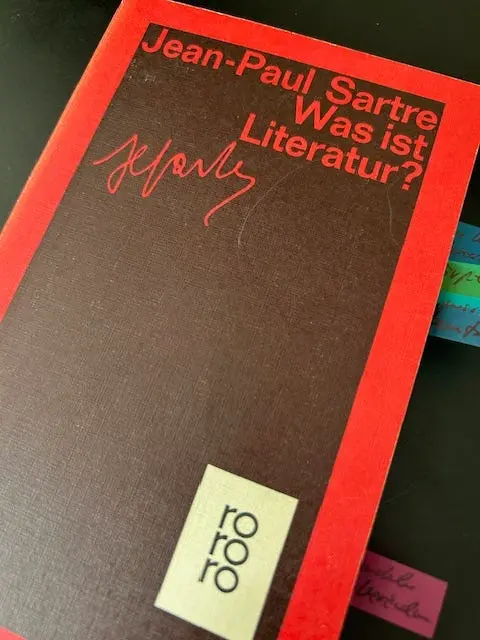
One reason is: I’m an author. Writing – and literature is everything written – is not about communication. Literature is, according to Jean-Paul Sartre, “non-communication”, just the opposite of communication. Most of the time, I remain silent. And as a reporter on the ground, I keep my mouth shut as well, listening to other people, sometimes asking questions and always making notes. A reporter should not show up as a pompous chatterbox, but a good listener. Later, I’m sitting at my desk while reading, researching and writing.
Want a sample?
Covering war zones, I firstly have to manage the survival of my partners – and then I’ll get my own through. We got under fire, saw shelling, missiles exploding very close, found ourselves in minefields again and didn’t know how we had gotten there. We looked up and saw half-decayed brains stuck to the ceiling, with flies sitting on them, and dead bodies on the floor. We met teenagers in the hospital who wanted to scratch their foot, but they no longer had feet because they had been amputated above knee – phantom pain. We talked to tortured men who were destroyed in body and soul. All the time, you lock your fears away in the deepest recesses of your soul.
What do you think how I’m coping with experiences like these – telling stories to bartenders?
You live and work all time as a split personality, in an official structure with visa, accreditations and military authorizations, and at the same time in a covert structure, the world of informants, local helpers, private drivers, secret sources, and you keep the two neatly separate. When you are blindfolded and taken in an armored truck to a place you don’t know, what do you do? Talk the driver, ask where you are going? That’s TV. You keep your mouth shut. You memorize every sound, every smell, every damn vibration.
During the night, you make notes. The others talk. You have your hands full trying to put the different parts of your personality back together again. Because the fears come back at night and want to kidnapp you. Is this something to brag about at a cocktail party?
Back in my office, I’m checking my notes, photographs, videos, interviews, I have to write it down, proofread, divide in the good and the waste parts. I compare my investigation results with studies of historians, political analysts, classified files. I’m fucking around with simple questions like: who? what? when? where? in which way? why? what source and is it reliable? How integrating the opposite side? Always more questions than answers. I’m thinking about timelines, outlines and composing structures. I’m looking for the right term, the next exciting sentence.
That‘s the dry work of an accountant. Is this the crime story you would listen in a gloomy bar on Friday night after a hard week? You’d get a fit of yawning with all this paperwork.
Privately, I’m quite boring, don’t talk so much, often taciturn. In interviews and on screen, I’m playing a role in order to provide information, that’s a form of broadcasting or teaching. „To see and to speak“, that’s the reporter’s business, as my friend Patrick Lawrence often describes our task. Journalism is not only my job, it is also my way of life, but there is a life behind the stage.
How should this work among close friends—sharing my work with others? Something like this: Hey Patrik, you’re always so secretive and never talk about your work. Let us share in your life a bit until the pasta is served! And I would reply: Well, folks, I had three dead bodies again last week. One was missing its head, the other two had their intestines hanging out and the crows were pecking at them. It was really awful, guys. Enjoy your meal! Do you really think this is the way it works?
I’m writing because I cannot smalltalk about that. I’m a writer, not a talker. Speaking is an action that aims to make contact with others; writing is an act that initially aims at one’s own experience, external and internal, a soliloquy. An author refuses communication. Writers refuse using language to establish conversation; they are living in the text like in a substitute body.
Writing is a way of capturing what you’ve experienced. It doesn’t make the horror go away. But in the shell of words, you can look at all the madness, like looking at a spider trapped in amber. Possibly it goes like this: „The goal of literature is life. Literature comes from the life of a person who cannot express himself, and literature derives its explosive power from what is ultimately unspeakable but nevertheless wells up from the entire structure of a text, from what is not written in the book as an opinion, but from what is in the melody of the sentences, in the movements of a body that wrote the books, in the existence that could only express itself in writing.“ That was formulated by a former colleague of mine, Christian Linder, in his essay book „The Dreams of the Desire Machine“.
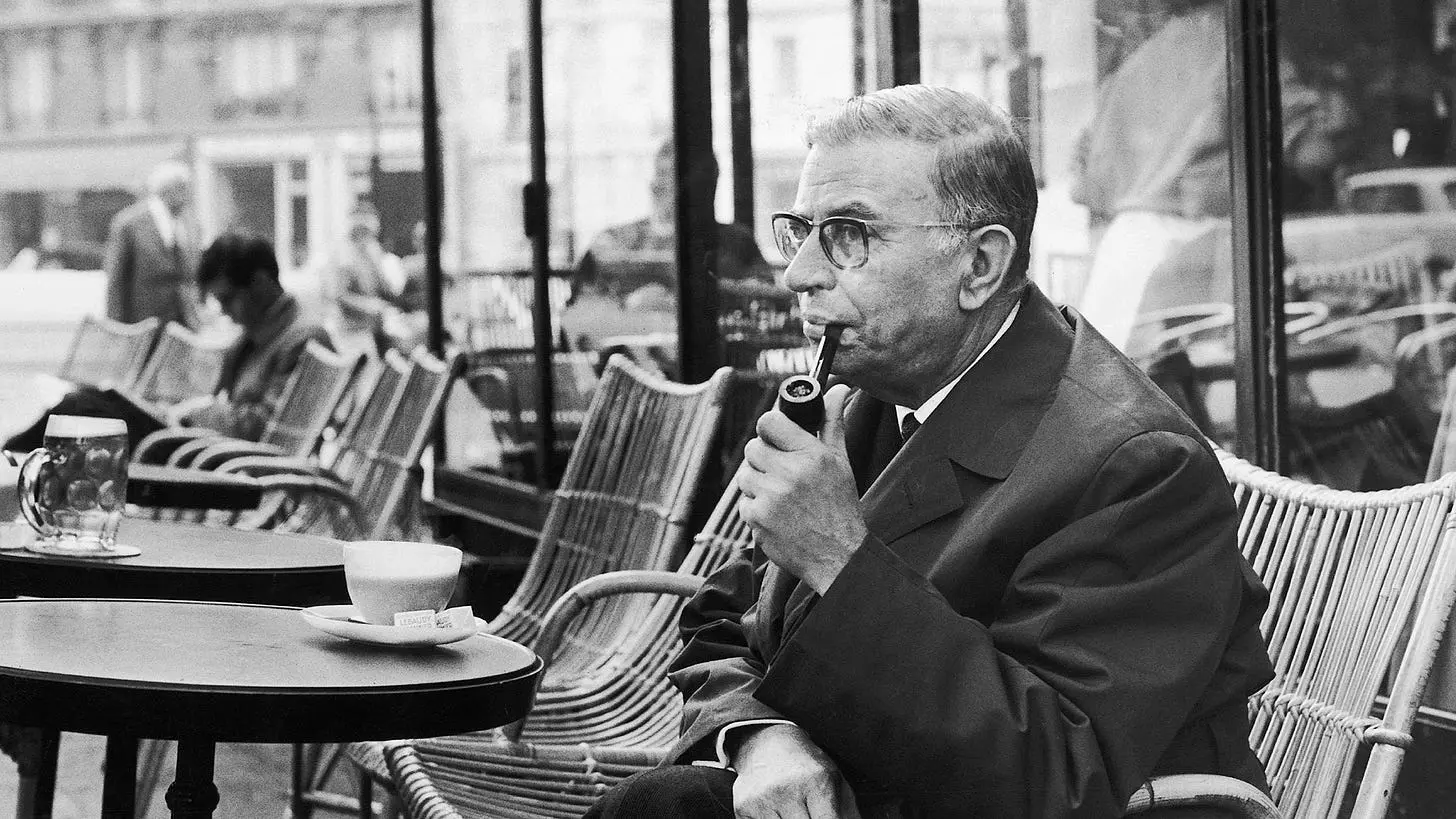
Literature doesn’t come from communication; it comes from prevented communication and seeks to propose new forms of expression and life. The ancients knew this, and that is why Jean-Paul Sartre derived his right to stand before an author like Jean Genet and ask: who are you, and what do I learn about myself by getting to know you through reading your books?
Perhaps one could put it this way: writers are, again in the words of Christian Linder, people whose tongues are paralyzed when it comes to talking about their lives and their identities, and who then reveal more or less everything about themselves in their texts, in a kind of secret code, everything they are not actually allowed to tell and always want to keep secret, which is why they need the hiding place of literature, and at the same time they are naturally driven by the desire to expose themselves as much as possible in order to be recognized in their hiding place.
And the message behind everything that is said and not said is always: You must change your life. Arthur Rimbaud knew it. Rainer Maria Rilke wrote that too. All literature ultimately aims at this goal; there is no other more important meaning in this work, unless you’re taking literature as pure entertainment. A writer wants to tell his life story. But because he cannot and because he suffers from not being able to, he writes his books and uses the strategy of exposing parts of his own subconscious, his own forbidden fantasy world, but more fearlessly by seemingly talking about other people and situations, whether fictional or real.
The author needs literature, he needs this hiding and seeking in the artificial body of language; it offers him protection, appeases his fears, and gives him the license to talk about himself, his abysses, his forbidden thoughts and fantasies. “Every work of art,” said Theodor W. Adorno, “is a premeditated crime.” Literature is a medium in which life seeks to recognize itself. Jean-Paul Sartre: „In fact, I never say as much in conversation as I do in my texts.“
The goal of literature is life. Literature comes from the life of a person who cannot express himself, and literature derives its explosive power from what is ultimately unspeakable but nevertheless wells up from the entire structure of a text, from what is not written in the book as an opinion, but from what is in the melody of the sentences, in the movements of a body that wrote the books, in the existence that could only express itself in writing.
This is the author’s perspective. I’d like to add the reader’s or user’s point of view, because, as Sartre explained: „The author writes a score, but it is the reader who performs this concert piece. What the author is creating here always escapes him, while the one, who does not know it, and takes it in each sentence as a new experience and can therefore grasp it in its concrete truth, that’s obviously the reader… Today, the reader does not take the book as an opportunity to dream, but to exercise his freedom, that means, he knows that he is in the process of reassembling a whole set of meanings… I believe it must be a meaning that he himself does not have in his life, something that escapes him; the words are available to him as they are to everyone else, but something escapes him because he is looking for something in the books. Why do people read novels or essays? Something is missing in the life of the reader, and he seeks it in the book. What is missing is meaning, because it is precisely this total meaning that he gives to the book while reading; the meaning he lacks is obviously the meaning of his life, this life that is a bad, poorly lived, exploited, alienated, betrayed, false life for everyone, but at the same time everyone who lives it knows very well that it could be different: where, when, how?“
Let’s find out what you, the reader, is missing in your life and seeking in my text. It’s, according to Sartre, a meaning that you can’t find in your life. Why do so many want to talk to me? It must be hidden in the space around the prevailing language, under the ruling opinion, behind the bars of propaganda and under the omnipresence of power-driven discourse: the silence beyond what can be said.
Critics of the government are systematically silenced. Dissidents are muzzled. Anyone who demands democracy, co-determination, and participation independent of the ruling party cartel is politically persecuted. They want to talk because they cannot find a voice in public. They want to reassure themselves that they still exist.
A symbol of this canceling procedure is the depraved culture of debate in parliaments. The President of the Bundestag Julia Klöckner calls almost every polemic against the Chancellor to order. In the EU Parliament, the chairwoman turns off the microphone to a Polish MEP who is against supporting Ukraine. The parliaments are experiencing an involution from a forum for democratic debate to a space for the publication of political power and domination.
All state apparatuses are involved in a modern form of witch hunt, including supranational organizations, the state supporting party cartel and its front organizations such as party-affiliated foundations, companies, especially the leading corporations of Digital Capitalism, state and industry-sponsored think tanks, associations, federations, and unions, but also so-called GONGOS - government-organized non-governmental organizations. Together, they are orchestrating the destruction of the democratic debate space and the repression of opposition figures and critics. This witch hunt is not just about the targeted person. It is about setting an example, about forcing others into anticipatory obedience by creating fear.
In this context, state and private sector actors work together in an effort to stabilize the private exploitation cycle and to maintain the population’s approval of the market economy and state order. It’s about submission to a neo-imperialist form of rule.
It is worth taking a closer look.
The central difference between Neoliberalism and Digital Capitalism, which rises on the smoking ruins of the neoliberal order, is this: In Neoliberalism, companies act on the market; the market is, as it were, a neutral entity to which everyone has access, provided they have the necessary capital. The leading media of Digital Capitalism ARE the market. Amazon, Google, Facebook, Apple - these are Internet platforms whose exploitation model consists in offering others a market, but being able to determine under what conditions. They determine who is allowed to enter the marketplace, control the market data, set standards for the traded goods and thus control the services offered, and set the prices for the offers and thus the profit margins.
They are digital monopoly companies because they dominate the market. The emergence of the digital corporations was only made possible by the financial support of the military-industrial complex. That is why the secret services have reserved a back door through which they have access to the information traded. Digitalisation, according to the sociologist Philipp Staab, is in obvious conflict with democracy.
The information we receive about these leading media of Digital Capitalism is only the information that has passed the upload filter of these corporations and the control of the secret services. The terms and conditions of the companies and the narrative control of secret governmental surveillance are more important than the freedom of opinion and speech of the constitution. The corporations thus determine the space of what can be said. Everything else succumbs to the silence of the digital space. Anyone who wants to learn more than private and state censorship allows must experience reality on site, in the real world. For most people, that’s impossible. Mind control is thus almost comprehensive.
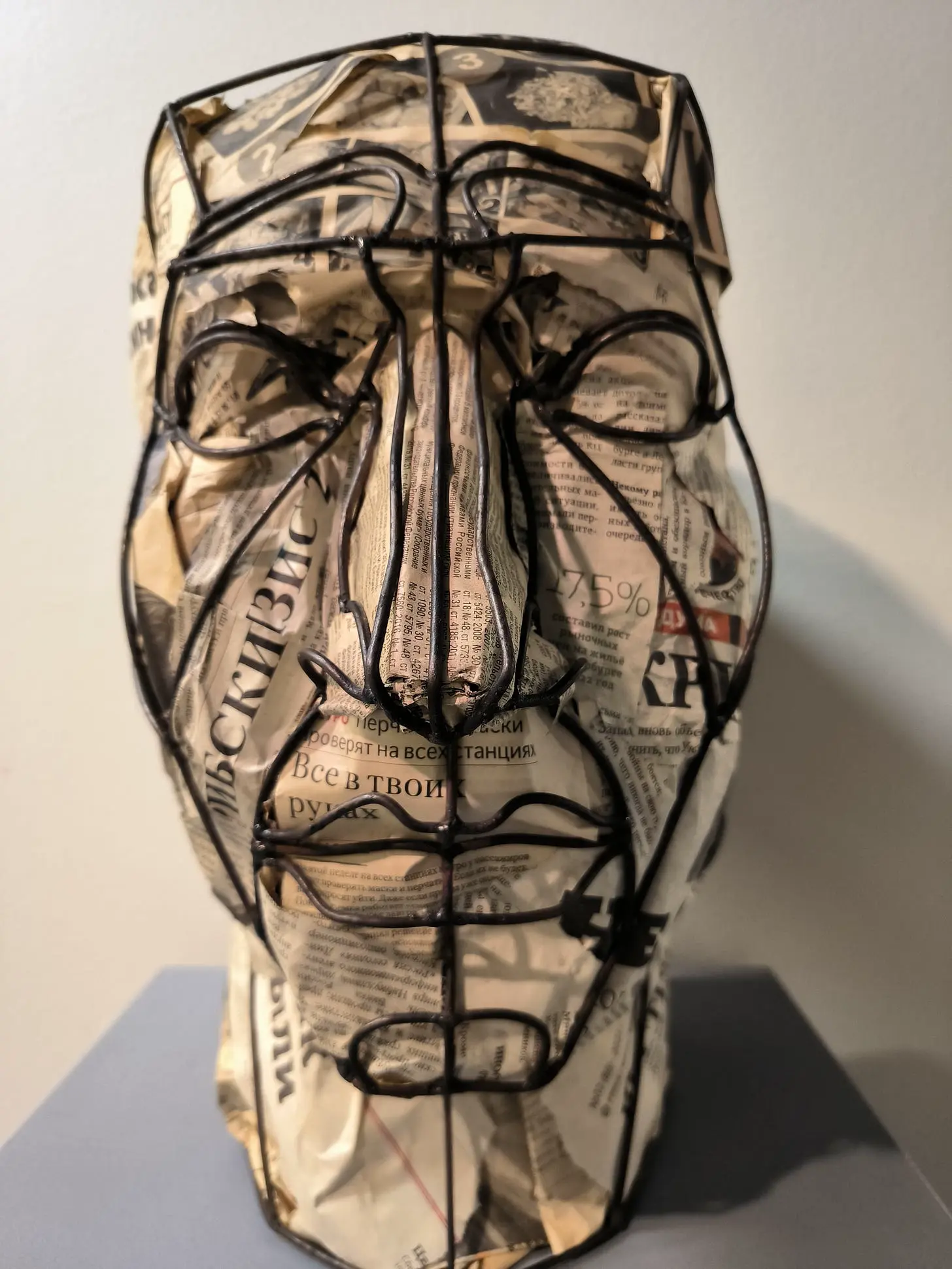
Anyone who leaves the permitted information space is canceled by the platforms and stigmatized as a producer of disinformation, and, depending on the need, as a conspiracy theorist, coronavirus denier, Putin sympathizer, or anti-Semite. State actors deliberately exploit this to divide society, manipulate public opinion, and thus stabilize their rule.
The platforms can refer to the guidelines of the European Commission, a supranational organisation that is not democratically elected and not subject to democratic control. The EU’s Digital Services Act even obliges them to fight disinformation - an anti-democratic free ticket. In its 17th package of sanctions, the EU Commission also imposes illegal sanctions on three German journalists, ensures that they are no longer allowed to travel, lose their jobs, their legal capacity, their passport, their bank accounts - an attempt to destroy their livelihoods. Russian media are blocked throughout the EU - an act of open censorship. The member states of the EU can thus destroy the democratic debate space in a kind of perimeter play via Brussels and silence unpopular opinions.
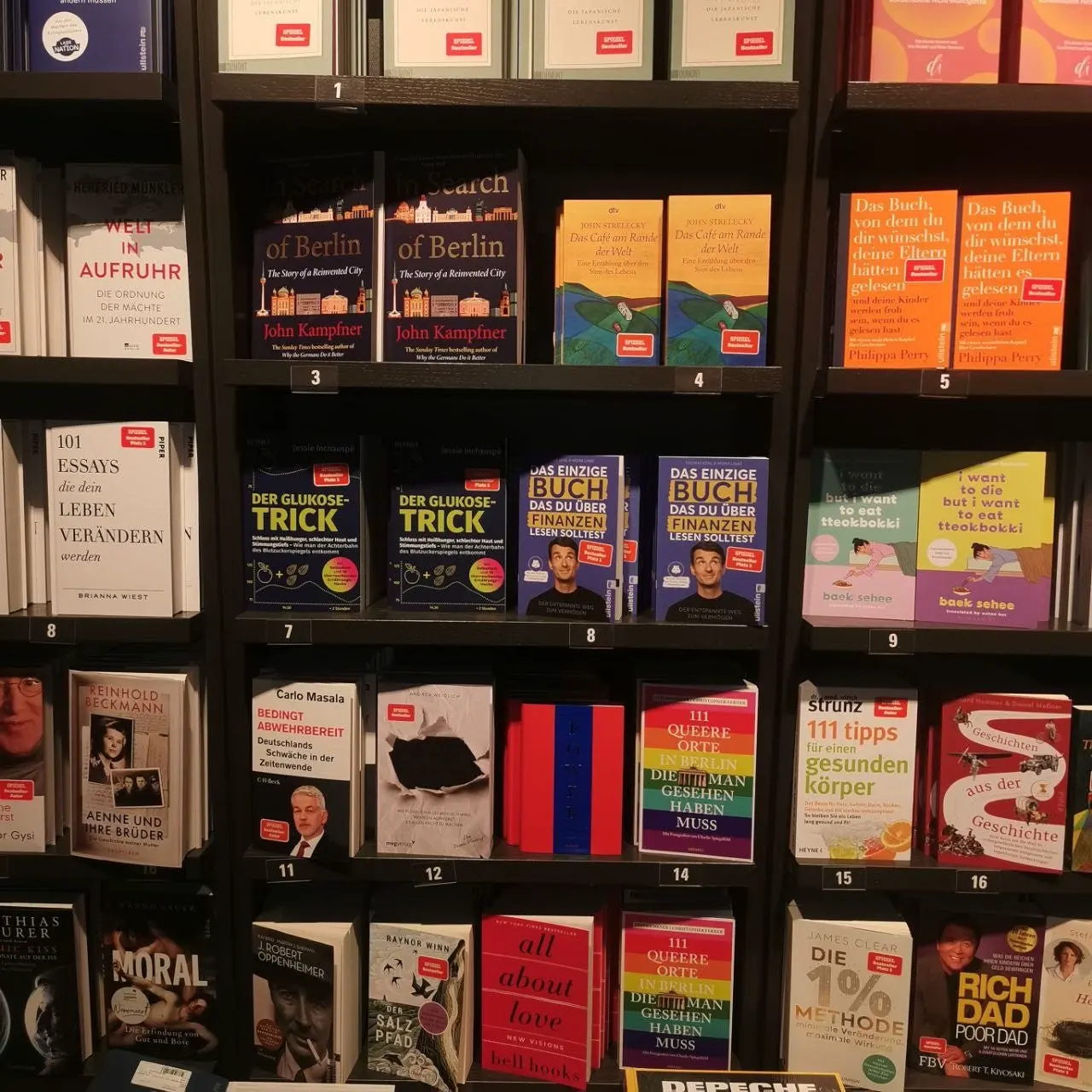
Other companies like booksellers and lenders are joining the witch hunt, partly because the manegement orders the cancelling procedure or partly the employees voluntarily want to participate in the prevailing climate of opinion and live out their own fantasies of omnipotence. Bookshops don’t offer books or movies; lenders de-bank the accounts of dissidents; media employees are threatened with warnings if they spread „conspiracy theories“. When it comes to disident bashing, everyone wants to join the party. This costs nothing and is good for the image. At Dussmann bookshop in Berlin, every Spiegel-bestseller is presented - but in October 2023, not mine. See No. 13:
All social organizations and socialization agencies are included in this propaganda and censorship complex. The repressive and ideological state apparatuses play a central role. Louis Althusser counts the police, the military, the secret service and the judiciary among the repressive state apparatuses: public prosecutors subject dissidents to police raids and explain on camera that this measure is the actual punishment, which amounts to the elimination of the presumption of innocence and the legal process.
Secret services like the German Verfassungsschutz degenerating from constitution protectors into protectors of the government, stigmatize government critics as delegitimizers and put pressure on banks and employers to take action against employees and customers by de-banking or disciplinary measures.The police brutally act against citizens who exert their democratic right to demonstrate and thus mutates from a people’s friend and helper to an instrument of terror against the citizens, which is intended to enforce silence and allegiance. The military can - according to the emergency laws in Germany - also be used against internal threats to the system such as rebellious citizens.
Deviators from the ruling opinion can expect labour law measures up to and including dismissal. The firing of Prof. Ulrike Guérot by the University of Bonn is an example. The ZDF reporter Armin Coerper was recalled from Mariupol after he reported rudimentarily on the actual conditions. The Berlin social welfare authority led by Cansel Kiziltepe is trying to dismiss without notice an employee of the State Office for Refugee Affairs for sending out an appeal to sign a petition against the genocide in Gaza via the internal mailing list – with the note that she was writing as a private person. From the ranks of the staff council came the hint that the cooperation could no longer be expected of her colleagues. This shows that once anticipatory obedience is unleashed, there is no stopping it. Everywhere the sycophants crawl out of their holes. The aim is to enforce censorship, suppress dissent and destroy existence.
However, it is cheaper and more inconspicuous to generate allegiance to the state and adaptation to the market capitalist system via the ideological state apparatuses. Kindergartens, schools, universities, churches and the media are working in this direction. The constant fire of propaganda in the secondary socialization agencies makes it possible to sow discord in the families as the primary socialization agency and to divide society through it. This secures the power of the ruling party cartel and distracts from the social grievances of the neoliberal economic system.
It does not matter whether these ideological institutions are stately or close to the state organised. To a large extent, media are in private hands. Freedom of the press is therefore the freedom of perhaps 200 people to spread their opinions. In public broadcasting, the filling of leadership positions requires the approval of the political parties and socially relevant forces in the supervisory bodies.
The Frankfurter Allgemeine Zeitung, Sächsische Zeitung, MDR, 3Sat Kulturzeit and other media have organized a denunciation campaign to prevent a discussion event with me from taking place in the municipal theater of Kamenz. Freelancers were used who are bound by instructions and instructed by transatlantically corrupted senior editors. The campaign was triggered by the German Ukrainian Historical Commission and the then ruling party B90/Greens, both front organizations of the warmongers in the propaganda battle.
So-called GONGOS - government organized non governmental organizations - orchestrate the pressure on dissidents. They influence the information space, discredit dissenting opinions as disinformation, pillory government critics and, together with intelligence services, orchestrate denunciation campaigns and Internet vulgarities on Social Media, which in turn can be used as evidence that someone is spreading conspiracy theories or anti-government narratives in order to dismiss the delinquents, cover them with repressive measures or cancel invitations to discussions – like I experienced it in Geilenkirchen near Aachen.
Organizations such as the German Library Association are putting pressure on public libraries to cancel events with anyone who deviates from government propaganda - as happened in my case in Malchin. Trade unions are putting pressure on their members to commit to supporting Ukraine in the war. Churches plead for arms deliveries. Scientists and so-called experts from think tanks financed by industry or the state provide the keywords to the warmongers and initiate campaigns against dissidents.
Authorities have set up so-called reporting centres for disinformation and advice centres against conspiracy narratives. We have arrived in a society of state-organized block-wardens and shabby informers. In Germany today, basically everyone who does not denounce others quickly enough makes themselves suspicious. „The steelhard shell of servitude“ (Max Weber) in Digital Capitalism is almost impenetrable. Don’t forget: the German word „Hörigkeit“ indicates a sexual dimension as well: sexual dependence. This is the deeper meaning of Spinoza’s sentence: Why do people fight for their servitude as if it were for their salvation?
And the propaganda machine is running at full speed. The goal is to silence every opposition.
This cannot be organized by a few people at the top of the state, NATO, or the government of the United States. This requires helpers at all levels of the system. The bearers of propaganda and censorship - two sides of the same coin - are the academic precariat and transatlantically socialized academics. Here, neoliberalism has prepared the field for Digital Surveillance Capitalism. The welfare state has been cut, national assets privatized, industrial relations liberalized. However, this does not mean more freedom. Quite the opposite.
In Germany today, more than half of a cohort is studying. After the exam, they aspire to the ideological apparatus. What they can expect are fixed-term contracts in schools, project work with NGOs or think tanks, freelance work in the media. In the long term, they find themselves in precarious working conditions and succumb to the pressure to adapt. They are striving for another hiring tomorrow, a follow-up project for the next six months, another temporary contract. At the same time, the first child is underway, you have to pay the apartment rent or condominium and the car is financed by credit. Pierre Bourdieu called the attitude that arises from this “respectful conformism”. These academic ideology producers deliver every shabby denunciation and stupidest propaganda in order to grind in with the boss and achieve continued employment.
The smarter ones or those with better connections seek proximity to transatlantic organizations such as the German Marshal Fund, Atlantikbrücke or Young Global Leaders, or apply for a scholarship from a transatlantic foundation, such as the Renaissance Foundation of the US billionaire George Soros. They want to help their careers advance through study visits, invitations to conferences and congresses, scholarships for PhD’s or internships in US organizations. This creates a transatlantically corrupted young academic population that remains largely attached to its proximity to its US supporters. Once in a in a position of responsability, these people are ready to ruin their own countries for a pat on the back from Washington. They will not be able to be taught better. As Upton Sinclair wrote in 1934: „It is difficult to make a man understand something if his salary depends upon his not understanding it.“
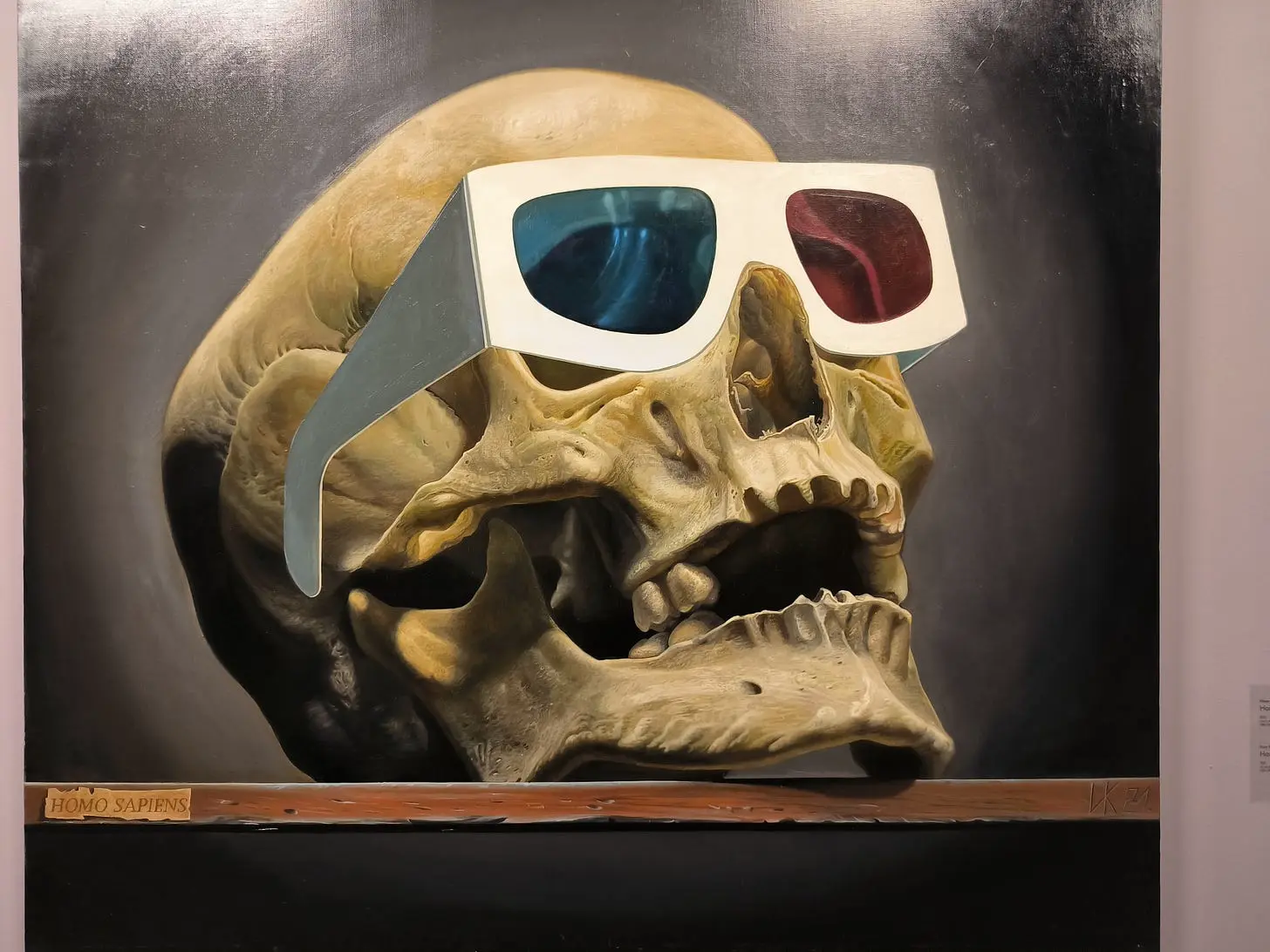
For all others who do not work in the ideological apparatuses, who do not sell their souls to the devil, this means that they should pay taxes and keep their mouths shut. For them, silence remains. They are those who are silenced by the state and its accomplices.
In Digital Capitalism, according to Philipp Staab, the social conflict between labor and capital, between the surveillance state and the citizen, is blocked in a fundamental way. Author and audience are chained together in this blocked conflict. Both political subjects are subsidized as consumers and users with digital free offers, while as workers in the production process they are systematically expropriated by the transfer of the surplus value they create to the capital side.
The users want to talk to me because they see themselves in the role of customers, not in the role of social actors, of revolutionary subjects. In conversation with me, these people want to speak out what they can no longer say in private or public space, and explain why they cannot act: social suffering that has been inflicted on people and that they themselves are no longer able to express because the circumstances have left them speechless; because they only suffer their misfortune, their misery, which are socially produced, but can no longer express it and act to avert disaster.
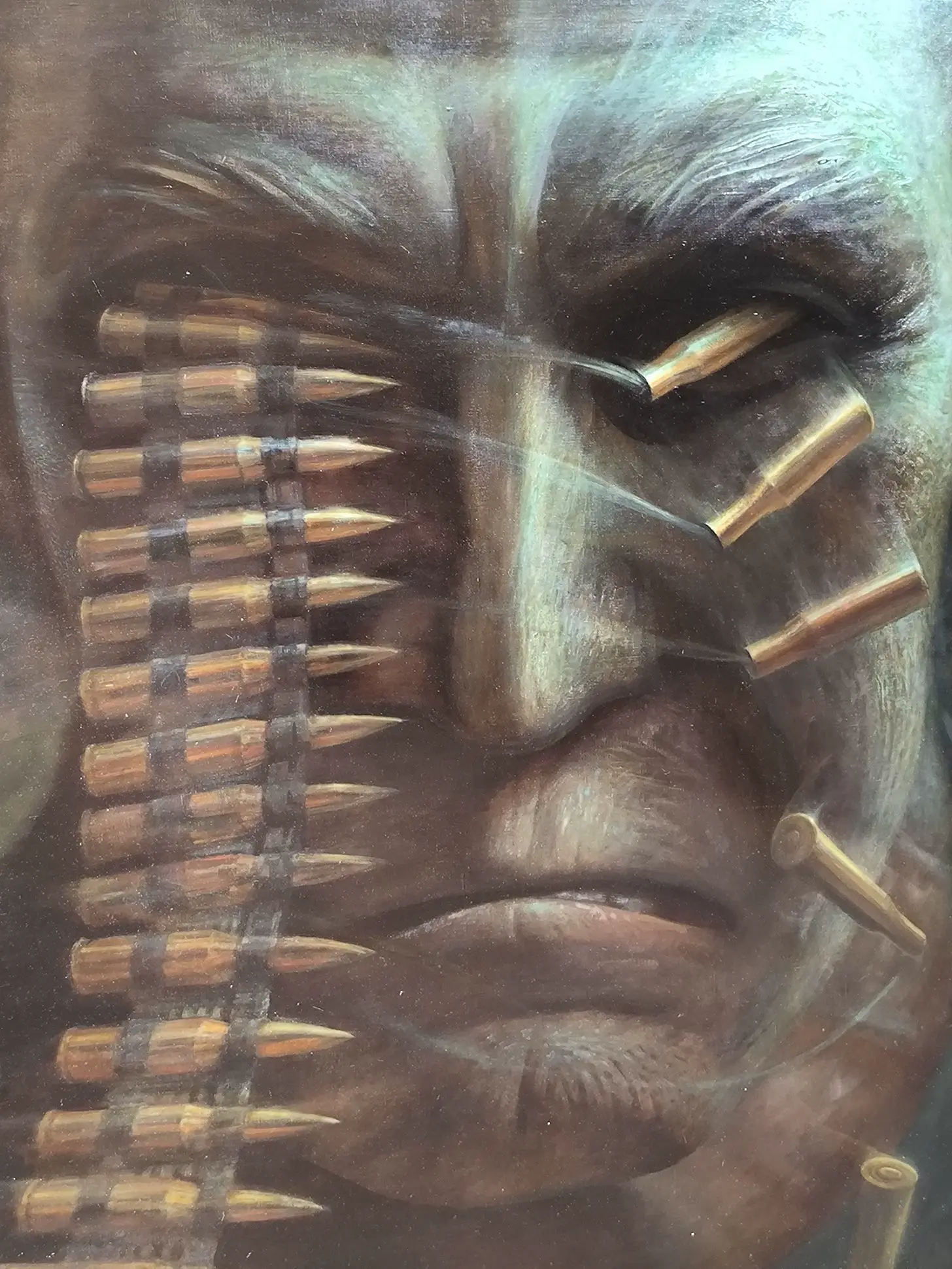
These are the people who want to talk to me. They want to break out of the prison of opinion and mind control. They know: The author’s weapon – my weapon - is the word. As Sartre wrote: „The committed writer knows that speaking is acting. He knows that uncovering is changing and that one can only reveal if one wants to change. He has given up the impossible dream of creating an impartial picture of society and human existence. Man is the being towards whom no being can remain impartial… The author knows that words are loaded guns, and when he writes, he shoots.“ His mind is trigger-happy. „He could remain silent, but since he has decided to shoot, it must be done like a man who aims at targets, and not randomly like a child who closes his eyes and just enjoys the bang.“
Many readers and users don’t realize that they are stealing my time to point this weapon at those who have brought about this state of affairs, exhale and take aim at those who want to impose a new dictatorship with anti-democratic methods, and who are leading this country to ruin. The author cannot talk. He has to load his revolver with verbal bullets. That’s my business to be taciturn in the substitute body of language, diving deeply in the wars to come.
In contrast, the reader is under another pressure. The power elites have silenced him. That’s why he seeks to talk to the writer, to meet him in his hiding place. In everyday life and workplace, his language has been stolen from him. Often, he cannot feel that he is in a state of self-alienation. The reader comes into an emotional blockade. Non-communication: This is possibly the pivot to the era of written culture, the days of refusal, when the mutiny on the Bounty took place.
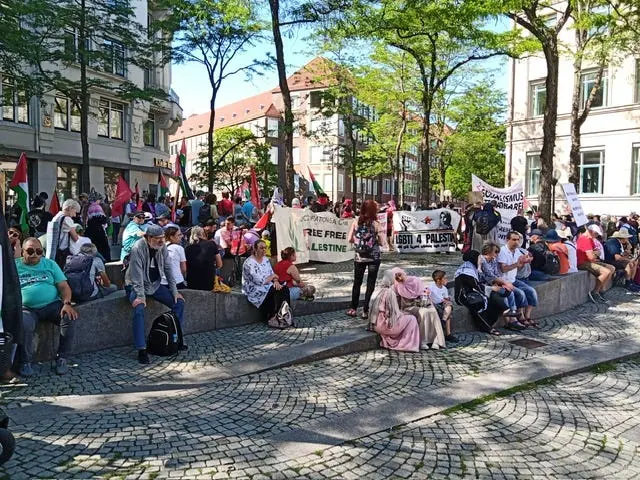
Aboard a ship, normally everybody complains about something. But if the crew remains silent, then uprising is in the air: where, when, how?
Thanks for reading! Subscribe for free to receive new posts and support my work.