Flowers for Piskarevskoye: A German gesture of remembrance leads from the siege of Leningrad straight into the renewed confrontation between Germany and Russia.
It is 4,000 euros. Compared with the sums discussed in international politics, it is a small amount. But the people who collected it want it to express something much larger.
The Society for German-Russian Friendship presents a donation cheque at the Russian Embassy in Berlin. The money is intended for the Piskarevskoye Memorial Cemetery near St Petersburg, one of the major burial sites for victims of the siege of Leningrad. The campaign is called “Flowers for Piskarevskoye.”
It commemorates one of the most brutal episodes of Germany’s war of annihilation against the Soviet Union. At the same time, it takes place at a moment when relations between Germany and Russia are worse than they have been for decades. Outside the embassy stand barriers and police posts. Russian institutions in Germany are being closed. Inside, Germans are donating money to preserve the memory of Soviet victims of the German war.
Flowers for the Dead of Leningrad
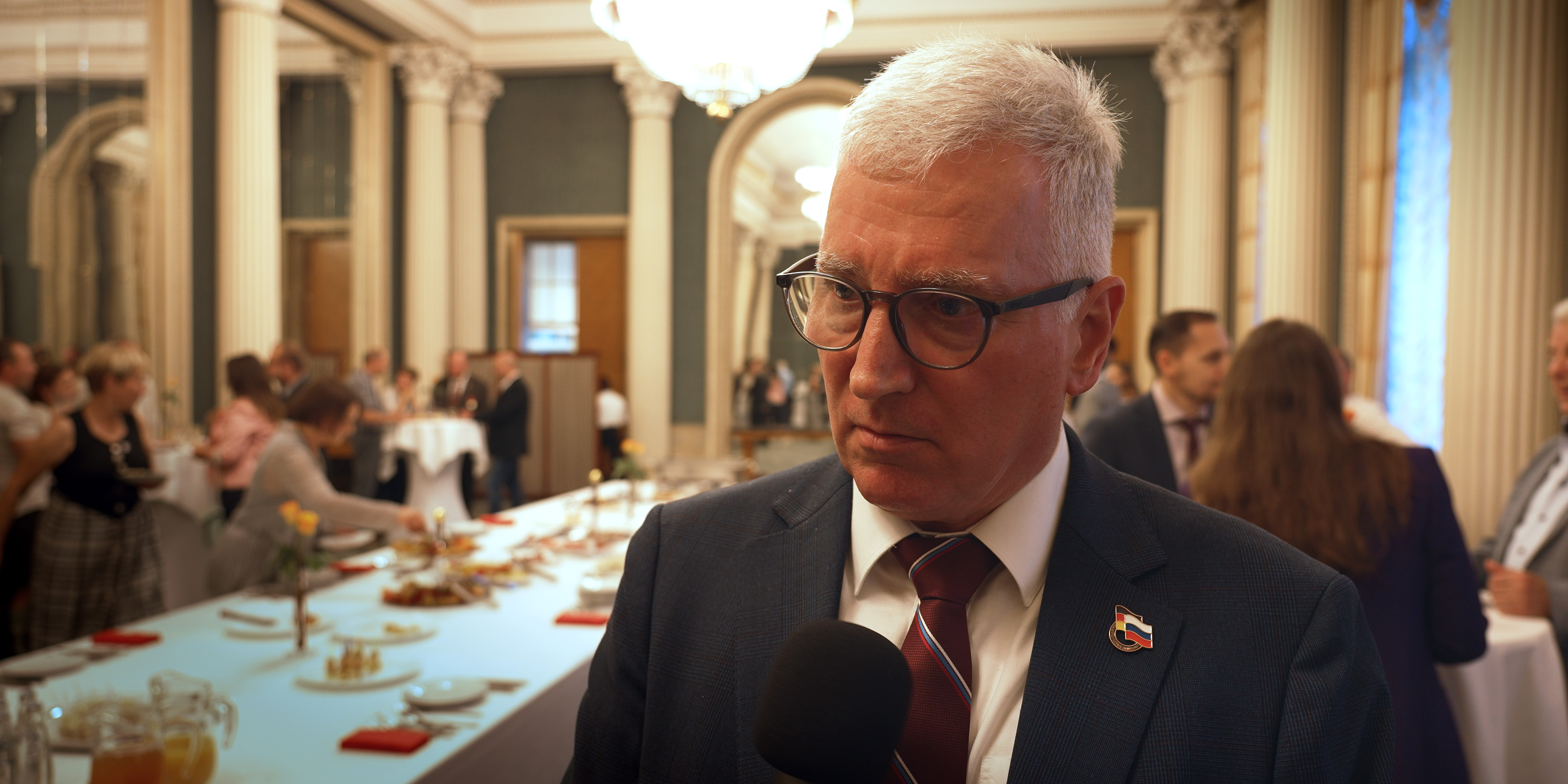
Patrik Baab: The Society for German-Russian Friendship presented a cheque today for €4,000. What is it for?
Torsten Rexin: This cheque comes from a fundraising campaign that we launched in connection with an exhibition, specifically marking 85 years since the Siege of Leningrad. The campaign is called “Flowers for Piskarevskoye.” We want to draw attention to the fact that this blockade, this genocide, carried out by the German leadership of the time, by the German Wehrmacht and by the German government, cost an incredible number of lives and was an enormous war crime.
We describe it as genocide. The Federal Republic does not describe it as genocide. We want to keep the memory of it alive.
We object to the Federal Republic’s decision not to compensate all victims, but only Jewish victims. We object to the fact that the people who starved to death in Leningrad are not regarded by the German government as entitled to compensation within this genocide. We consider that a catastrophe.
That is why we believe attention must be drawn to the equality of the victims. And that is why we are collecting this money, regardless of ethnic origin, political or national origin, or religious affiliation.
Patrik Baab: Why has the Siege of Leningrad and its victims not yet been recognised as genocide by Germany?
Torsten Rexin: That is beyond our knowledge. We have heard that the Russian side is seeking such recognition through diplomatic channels. The previous statements, if I remember correctly from 2018 or 2019, amount to saying that the victims of this hunger blockade were compensated within the framework of compensation or reparation payments.
We cannot find a reasonable answer for singling out Jewish victims. We do not know why this is not treated uniformly, why the victims are differentiated in this way.
Patrik Baab: Mr Rexin, you campaign for understanding between Germany and Russia. But the signs of the times point in the opposite direction, for example through the closure of the Russian House and through a drone incident in Leipzig which, in my view, has still not been clarified and is being used to restrict contacts further.
Torsten Rexin: The historical lesson from relations between Russia and Germany is that mutual knowledge of interests and circumstances, of culture and of people, creates a prospect of peaceful coexistence.
At the moment, all kinds of chimeras are being invented, all kinds of fabrications. It cannot be anything else with this drone. It is absurd. But that is not really the point.
The point is that we must not simply wipe away the bridges we have built with great effort since 1945: linguistic understanding, cultural understanding, science, economic exchange, the connections, especially of course in the GDR.
The longest period of peace Europe has seen was between 1945 and 1990. In the Warsaw Pact area and the former socialist countries, there was friendship between people. And we will not let anyone talk us out of that.
Patrik Baab: Is the memory of the war crimes of the Wehrmacht and the Hitler dictatorship meant to be erased here?
Torsten Rexin: One can suspect so. It is striking that some visitors do not even know that the siege took place. They do not know the term Operation Barbarossa. And they do not know the Backe Plan either.
People are not aware that war crimes were planned here. It is not simply a matter of one officer or NCO overstepping the mark in wartime and acting outside the law. These crimes were strategically organised.
I often hear the argument that the Russian side also committed war crimes. Rapes are cited and so on. In terms of numbers and strategy, that cannot be compared with what the German Wehrmacht and the German Reich planned in their treatment of the Slavic peoples.
Patrik Baab: How do you assess the German government’s conduct, associated with statements such as “Russia will always be our enemy” or “Western values are being defended in Ukraine”?
Torsten Rexin: History has already answered the question of whether Russia is our enemy. Russia is by no means our enemy. We take the view that the Russian people, Russian society, are friends of German society.
The rest is nonsense. It is put into the world to create a mood, produce propaganda and stir up fear. We oppose that.
Through the communication of knowledge, historical circumstances, historical facts and cultural circumstances, we want to strengthen the connection between peoples and bring people closer together: those who live here with Russian roots, but also those who live in Russia with German roots. And there are a great many of them.
A City Was Meant to Disappear
The planned exhibition on the Siege of Leningrad from 1941 to 1944 can no longer take place at the Russian House. In this way, the German government has also disposed of a central event in German-Soviet history.
The two-and-a-half-year siege of the city was part of the National Socialist war of annihilation and subjugation. After the invasion of the Soviet Union in 1941, Leningrad was to be starved into submission. By the end of the siege on 27 January 1944, around one million people had died of hunger, cold and exhaustion.
In Russia, this is regarded not only as one of the Wehrmacht’s gravest war crimes, but also as genocide. The German government rejects this classification.
The divides between Berlin and Moscow are now deeper than at any time since the end of the Cold War. Russia holds NATO, Germany and the United States responsible. The events cited include the Maidan in Kyiv in 2014, the military action against separatists in Donbas, and NATO’s eastward expansion, including the invitation to Ukraine to join the alliance.
“We Do Not Want to Destroy Bridges”
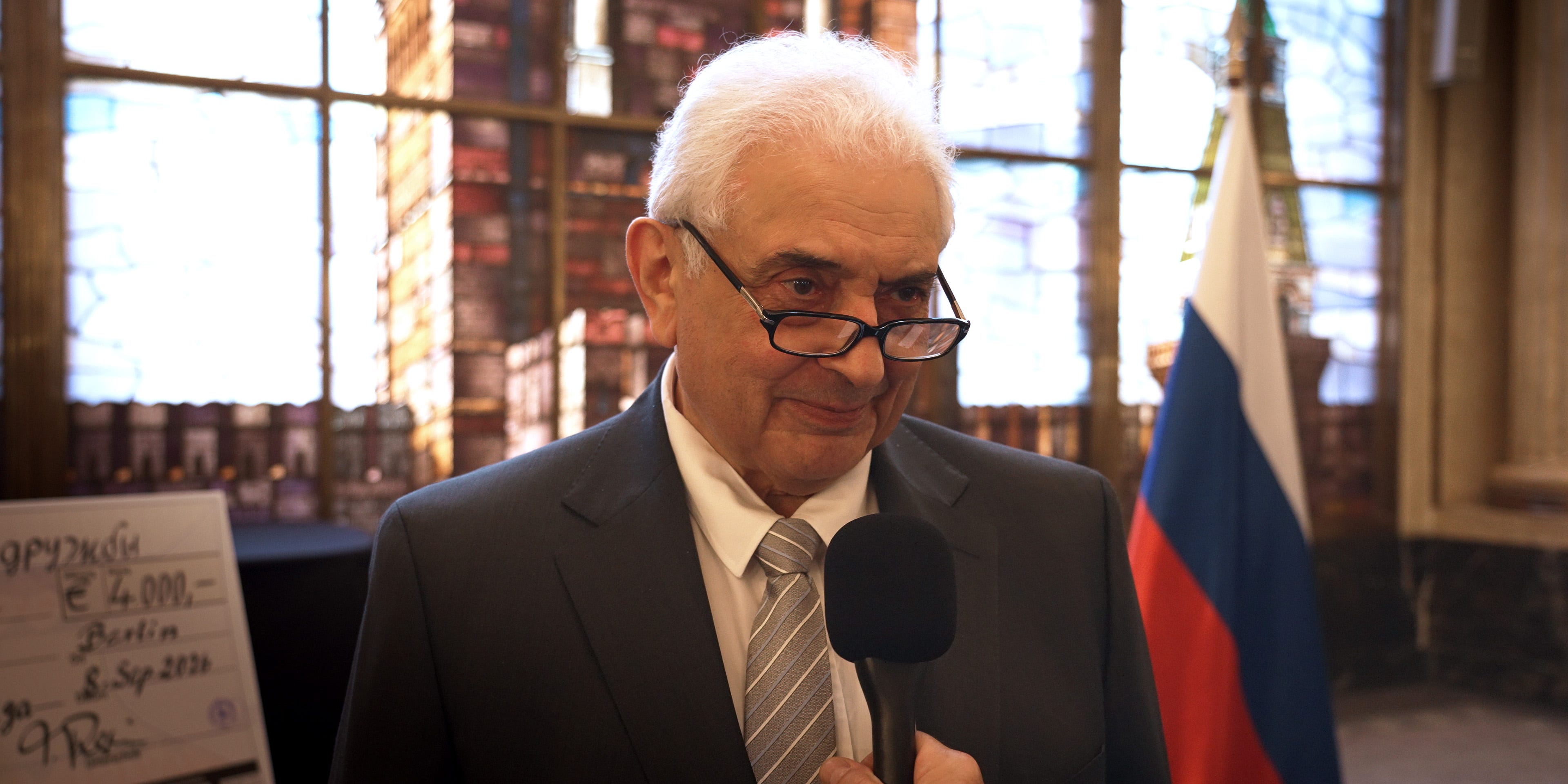
Patrik Baab: Mr Ambassador, what feelings and thoughts do you associate with the presentation of this cheque, with this gesture?
Sergej Netschajew: It is a very friendly, very heartfelt gesture. I would say this gesture inspires me. This objective culture of remembrance that is being demonstrated today, the fact that many Germans share these memories of our tragic history and continue to remember the victims of the Soviet Army and the Russian people, has always brought us closer together.
We do not want to destroy bridges. And what we achieved together with the German people after the war was absolutely unique. This remembrance also inspires me personally.
I hope that our friends in St Petersburg, in Leningrad, will appreciate this gesture properly and with great respect. And to our friends in the society and the working group, I wish all the very best from the bottom of my heart.
Thank you very much for standing beside one another and together in these turbulent times.
Patrik Baab: Can you explain to people in Germany what the Siege of Leningrad means to people in Russia?
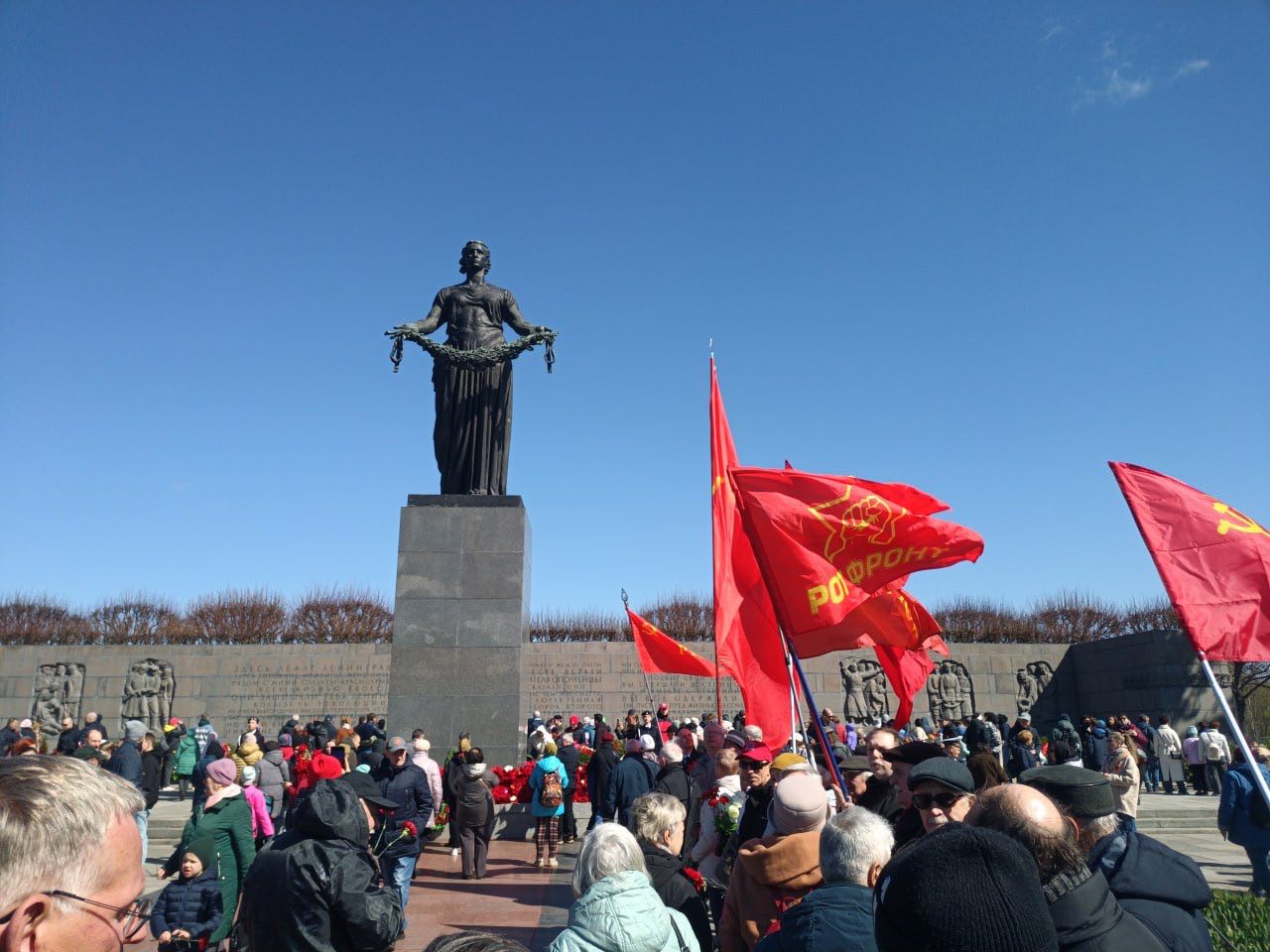
Sergej Netschajew: It was one of the most tragic chapters of the Great Patriotic War. A great many victims of the siege lie in the Piskarevskoye cemetery. They are civilians.
Hunger, disease, winter and cold were the causes of death.
But Leningrad stood and was never conquered. Although, as far as we now know from historical documents, it was a fundamental objective of the Nazi regime: Leningrad had to be levelled and destroyed.
Every year, on 8 September and at the end of the siege, we commemorate these days with tears in our eyes. Many films are made about the heroes of the siege and about the liberation of Leningrad.
It is a symbol of heroism, steadfastness, courage and self-sacrifice, of loyalty to the homeland. We will never forget that.
President Putin himself lost his brother there. He visits the cemetery and lays flowers. We all do that. This tragic chapter remains in our hearts.
But I am pleased that Germans with a friendly attitude remember these crimes of Nazism and continue to cultivate friendship with our people. We value that highly.
We have experienced a great deal together in our history. And when we were together, it was a happy chapter for both peoples, but also for Europe.
Patrik Baab: People in Russia speak of our shared history. The German government is making history against the Russian Federation with the closure of the Russian House and the still-unresolved drone incident in Leipzig. What is your reaction?
Sergej Netschajew: We have commented on this situation several times, including in Moscow. President Putin said it was a major mistake. There have also been sharper statements by Russian politicians, because we have not deserved this kind of treatment.
We categorically say no to this provocation. It does not belong to our forces or our services. In Leipzig, the responsibility is not ours. These are empty inventions, without proof or evidence. And that is very sad.
We can understand the objectives. Someone wanted to provoke the German government. This provocation was intended to establish a possible Russian trail, intensify the anti-Russian campaign, draw Germany ever deeper into the conflict and saturate Ukraine with new weapons. That is how I see this whole macabre story.
Everything could have been handled differently, including through bilateral relations. Our experts could have looked at it and asked: What is this? And then they would certainly have explained that this whole story was not organised or carried out by us.
If we had intended something, it could have turned out completely differently. But we have no intention of doing anything against the German people, against our friends in Saxony, in Leipzig.
We have said repeatedly, and President Putin has said it personally: We do not want war with Germany, we do not want war with NATO, we do not want war with Europe.
And this conflict in Ukraine, from my point of view, is not Germany’s war.
Patrik Baab: But you also said recently: Our patience is not unlimited. What does that mean?
Sergej Netschajew: It means that some Western states are now trying to organise the production of long-range weapons in Ukraine in order to reach areas deep inside the Russian Federation.
The regime in Kyiv is increasingly using terrorist methods against the civilian population and against civilian targets. And it is terrible when some Western states contribute to Kyiv continuing these attacks.
Production facilities in Ukraine where foreign weapons are produced are legitimate targets for us.
Without doubt. But of course that does not improve our relations with the Western states and with the states supplying these weapons.
Patrik Baab: What do you hope for in contacts between people in Russia and Germany?
Sergej Netschajew: I hope that people in Germany will hear different opinions, objective opinions. We try to bring these closer to readers and viewers because not all mass media are accessible to us.
But as I said, we want to live in peace with the German people and remember the good traditions of neighbourly relations.
I very much hope that in our common future we will also experience brighter chapters. Hope dies last.
125 Grams of Bread
What happened in Leningrad during the Second World War remains alive in Russia to this day.
A secret directive from the High Command of Army Group North stated: “The Führer has decided to raze Leningrad to the ground. After the defeat of Soviet Russia, there is no further interest in the continued existence of this large settlement.” Requests for surrender were to be rejected.
The winter of 1941/42 brought temperatures as low as minus 40 degrees Celsius. There were 125 grams of bread per day. Emaciated bodies staggered through the city; corpses lay in the streets.
At night, trucks crossed the frozen Lake Ladoga, bringing food and ammunition into the city and carrying the wounded out. Under constant shelling and air raids, the drivers navigated by sight across the ice.
Twenty-seven million Soviet citizens fell victim to Germany’s war of annihilation. A horror the Russians forgave. Moscow agreed to German reunification. But most Germans have forgotten.
When Only the Weapons Speak
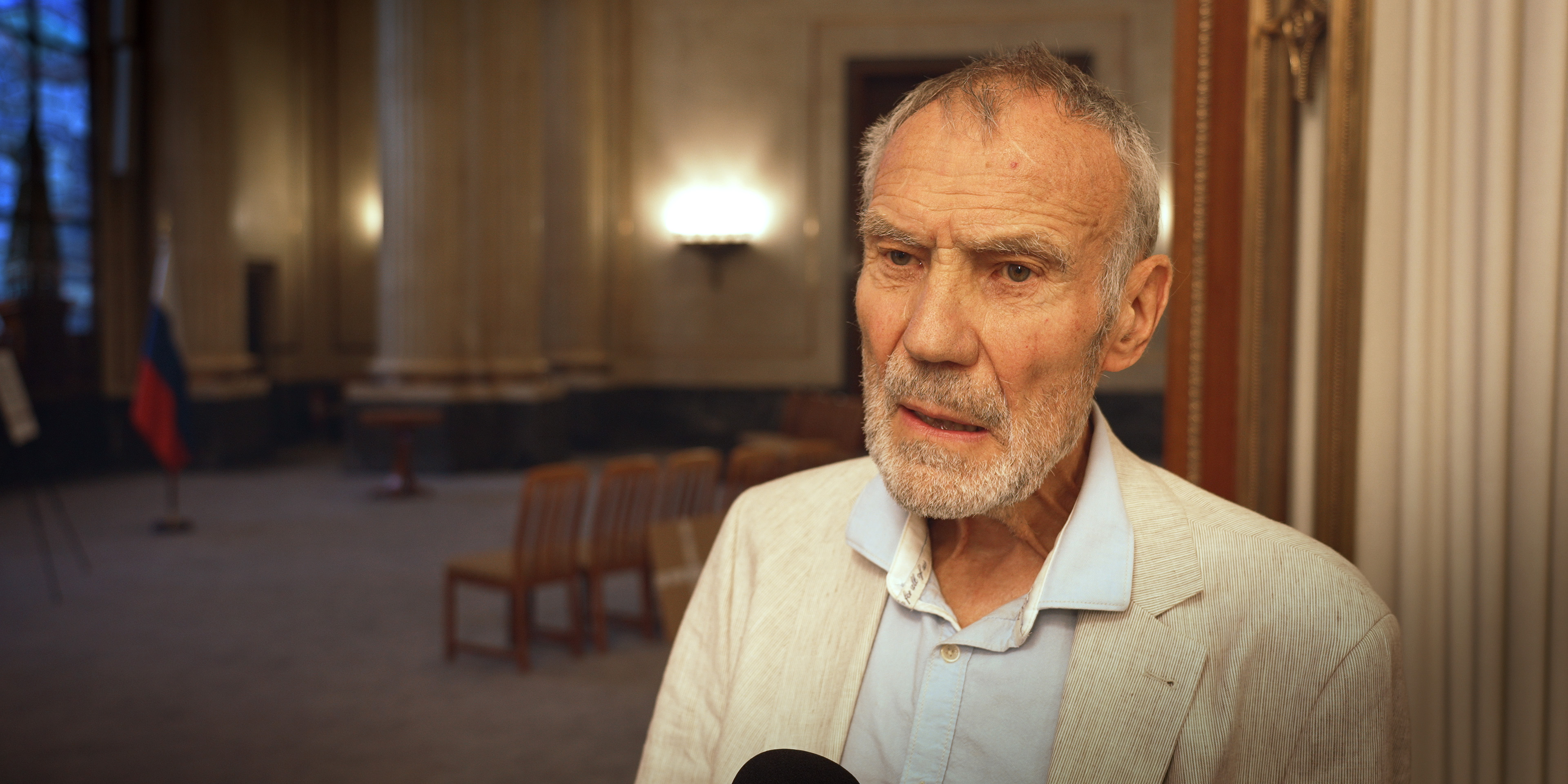
Patrik Baab: Professor Schneider, you have dealt extensively with German-Russian history and its psychological consequences. When you hear today that the Russian House is being closed and that an alleged drone has been discovered at Leipzig airport, what goes through your mind? How do you assess it?
Michael Schneider: I find this whole story about the alleged drone in Leipzig outrageous. It is a provocation in which Russian responsibility has not been proven by anything. It was simply asserted.
To be honest, it reminds me of the beginning of the Second World War, when Poland was invaded with the argument that Polish soldiers had attacked the German radio station at Gleiwitz. We know today that German forces were involved, disguised as Poles.
This whole drone operation smells like a nasty fake.
Patrik Baab: What does the German government want to achieve with it?
Michael Schneider: It apparently wants to cut the last diplomatic channels and institutions. And that is a very bad sign.
Because this is how wars always begin: diplomatic channels are cut off, and then only the weapons speak.
I find that an extremely bad and worrying sign.
Patrik Baab: At the same time, the Russian House was closed. Are cultural relations between people in Russia and Germany meant to be interrupted?
Michael Schneider: It seems so. That is how one has to interpret it. To me, it smells of escalation, of a quite deliberate escalation on the part of the Federal Republic of Germany. It gives rise to very dark thoughts.
Patrik Baab: Do you expect the German government to draw Germany deeper into the war in Ukraine?
Michael Schneider: I fear that under BlackRock Chancellor Merz, this is already happening. In my eyes, Friedrich Merz is a typical vassal who dances to the American tune.
Patrik Baab: Is the basis for this, as you have described it, a historical reversal of guilt? What does that mean?
Michael Schneider: Yes, I think so. The Germans waged a criminal war of annihilation against Russia which, to this day, is not described as such.
Today is 8 September, the beginning of the Siege of Leningrad. In Leningrad, you committed genocide. You subjected around 1.5 million people to death by starvation. And starvation is a war crime.
If you seal off a city and subject the population to starvation, that is genocidal. But to this day it is not seen that way.
In Germany, we recognise the Holocaust of the Jews. It was a grave crime against humanity, a genocide. But the campaign against Russia cost millions of people their lives outside regular combat operations. That too was genocide.
To this day, it is not seen that way in Germany. This second genocide was systematically silenced after 1945. The discussion was always only about the Holocaust and never about this war of annihilation against the Soviets. It was a barbaric war of annihilation.
Hitler did not only want Leningrad destroyed. He also wanted Moscow razed to the ground and Russia turned into a German colony.
A Kind of Reversal of Guilt
Patrik Baab: The war in Ukraine gives many people an opportunity to hold the Russian Federation responsible for a war. If one looks more closely, one quickly sees that the West and NATO also played a considerable part in the emergence of the war in Ukraine. Is an attempt being made here to reverse guilt?
Michael Schneider: Yes, I think that is a kind of reversal of guilt. The Russian Federation naturally felt threatened by NATO’s eastward expansion. If countries right up to Russia’s borders are drawn into NATO, Russia was bound to feel threatened.
This process was accompanied by the Maidan in 2014. The Maidan led to a right-wing radical government coming to power, which contributed to the division of Ukraine and at the same time to the shelling of Donbas.
This entire prehistory of the war, before Putin then invaded, is completely suppressed. It is excluded by the media.
As a result, most uninformed German citizens get the impression: Well, the Russians simply invaded the country.
And that gives many people in Germany a kind of feeling of emotional relief.
Patrik Baab: Emotional relief?
Michael Schneider: Emotional relief, exactly. The Russians are, after all, an evil people and an imperialist, aggressive country. That is how simply it works.
Patrik Baab: What do you expect for the future of German-Russian relations? What do you hope for?
Michael Schneider: If things remain as they are, if Merz and his CDU remain in government, then I expect nothing good.
In the 1980s, when we demonstrated in Bonn’s Hofgarten, there were hundreds of thousands of us. Now we have only a sparse few thousand at peace demonstrations. It is really enough to make one despair.
It reminds me of the First World War: the sleepwalkers. That we are once again sleepwalking into a new world war. That is my fear.
Because I do not see a large part of the population waking up and opposing this government. I do not see it.
Conclusion: What Remains of Remembrance?
The report begins with a small, concrete act: 4,000 euros for Piskarevskoye. From there it moves into the memory of the siege of Leningrad and finally into the middle of today’s German-Russian confrontation.
Torsten Rexin wants to keep alive the memory of Germany’s war of annihilation against the Soviet Union and rejects the renewed image of Russia as an enemy. Sergei Nechaev speaks of the bridges between Germans and Russians, says Russia does not want war with Germany, and at the same time warns against further military involvement by Western states. Michael Schneider sees deliberate escalation, speaks of a historical reversal of guilt and fears renewed sleepwalking into a major war.
These are different voices and political theses of different reach. They are connected by the question of what historical responsibility means when a former wartime enemy, with whom understanding was built over decades, once again becomes a political opponent.
Perhaps that is where the meaning of the 4,000 euros lies. Not in the size of the sum, but in the message:
“We have not forgotten.”